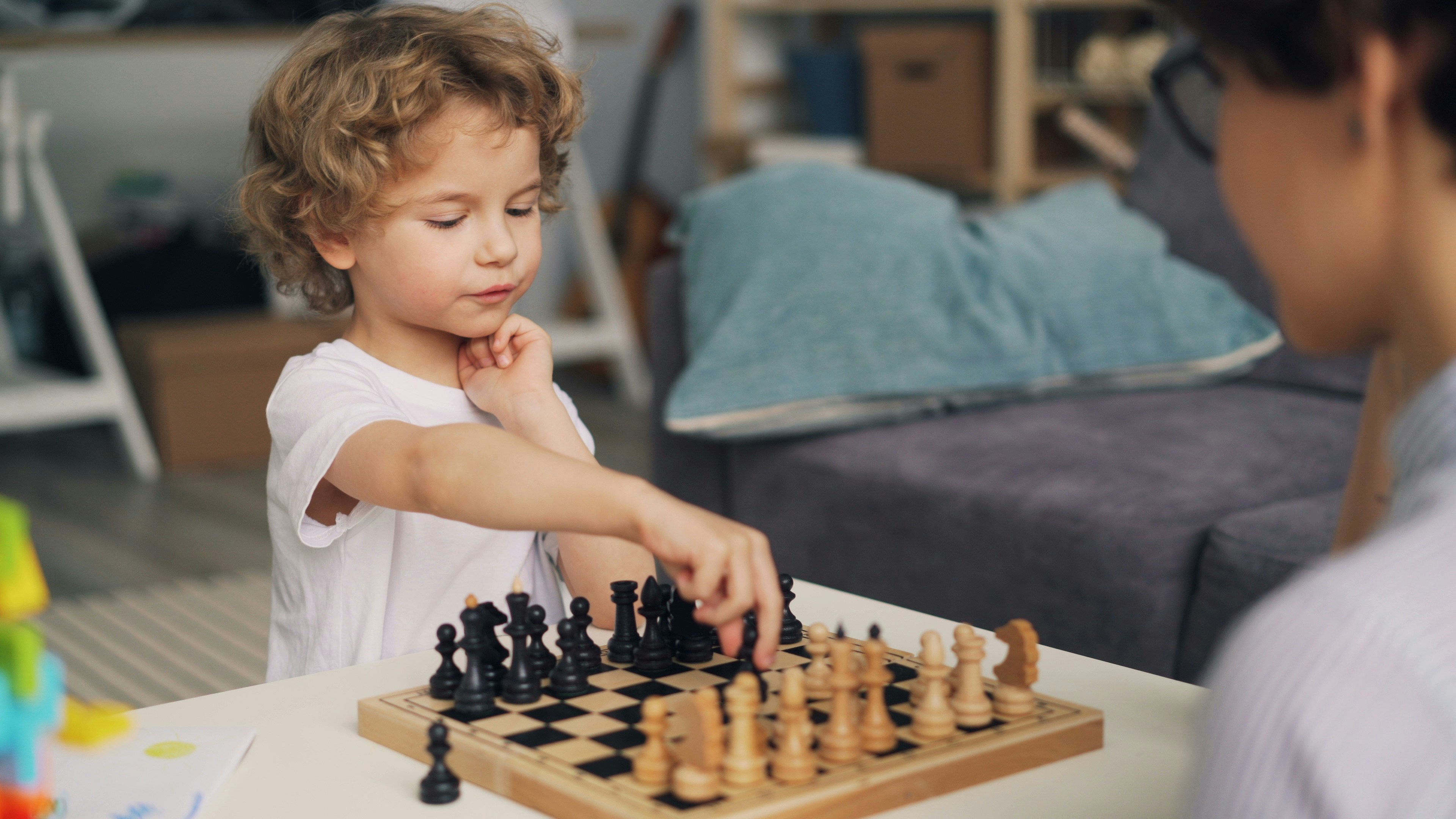
When parents hear that Eduvision offers a chess programme, the most common reaction is polite interest - followed by a quiet assumption that it's a nice-to-have, not a priority. Chess is a hobby. A rainy-day activity. Something for quiet kids who like thinking.
The research disagrees - quite strongly. Over the past two decades, a growing body of evidence has established chess as one of the most effective tools available for developing the cognitive and emotional skills that determine a child's long-term success. Not just in school, but in life.
Here's what the science actually says - and why we think every school in Malaysia should be taking it more seriously.
Chess Trains the Brain in Ways Most Subjects Don't
Most academic subjects develop one cognitive domain at a time. Mathematics builds numerical reasoning. Literature builds language and empathy. Science builds analytical thinking. Chess, unusually, exercises almost all of them simultaneously - and in a way that children find genuinely engaging.
A landmark study published in New Approaches to Chess as an Educational Tool found that children who received chess instruction showed measurable improvements across several cognitive areas, including:
- Working memory - the ability to hold and manipulate information in the mind while performing a task
- Pattern recognition - identifying familiar structures in new situations, a foundational skill for both mathematics and reading
- Spatial reasoning - understanding how objects relate to each other in space, strongly correlated with performance in STEM subjects
- Concentration - the capacity to sustain focused attention over an extended period
What makes this particularly significant is that these are transferable skills. A child who develops stronger working memory through chess doesn't just get better at chess - they get better at retaining information in class, following multi-step instructions, and solving problems under pressure.
"Chess is not just a game of moves. It is a game of thinking ahead, managing emotion, and learning from failure - all in a safe and structured environment."
The Emotional Intelligence Angle That Most People Miss
The cognitive benefits of chess are well-documented. Less discussed - but equally important - is what chess does for a child's emotional development.
Every chess game ends in one of three outcomes: a win, a loss, or a draw. Losses are a guaranteed part of the experience, even for strong players. This makes chess one of the few structured activities where children are repeatedly and unavoidably required to process failure, regulate their emotional response, and return to the board.
For many children, especially those who are academically strong and accustomed to succeeding easily, this is genuinely challenging. The discomfort of losing to a peer - and having to shake hands, reflect on what went wrong, and try again - builds a kind of resilience that is very difficult to teach in a classroom.
Researchers at the Universidad Autónoma de Madrid found that chess instruction was associated with significant improvements in emotional regulation and frustration tolerance in primary school children. These are qualities that are directly predictive of academic persistence and professional success later in life.
What the Data Shows About Academic Performance
17%
avg. improvement in maths scores after one year of chess instruction
35%
improvement in reading comprehension in chess-playing students
2×
more likely to complete homework consistently vs. non-chess peers
A widely cited study by Dr. Stuart Margulies examined over 53,000 school students in the United States and found that chess players consistently outperformed non-players in standardised reading tests. A separate study in Belgium, covering over 2,900 fifth-grade students, found similar improvements in mathematics.
The proposed mechanism is straightforward: chess demands that children think carefully before acting, evaluate consequences, and revise their approach when things go wrong. These habits of mind - applied consistently over months of play - appear to transfer into how children approach academic tasks.
Why It Works Best as a Structured Programme, Not a Club
Here's a distinction that matters: the benefits of chess described above don't emerge automatically from casual play. They emerge from structured, coached instruction where children are taught not just how the pieces move, but how to think - how to plan, how to analyse their games, and how to learn from their mistakes.
A child playing chess on their phone against a bot is having fun. A child in a well-structured chess programme is developing a systematic approach to problem-solving that will serve them in every subject and every challenge they encounter.
This is why Eduvision's chess programme is delivered by trained coaches using a structured curriculum - not simply by setting up boards and letting children play. Each session builds on the last, introducing new concepts and reinforcing the thinking habits that produce real cognitive growth.
Is Chess Right for Every Child?
In our experience: yes, with the right environment. Chess has a reputation as a game for a certain type of child - quiet, analytical, introverted. In practice, we've found that the game appeals to a much wider range of children once the social stigma is removed and the competitive element is properly managed by a skilled coach.
Children who struggle with sitting still often find that chess provides a form of structured engagement that holds their attention in a way that conventional classroom activities don't. Children who are highly competitive find a healthy outlet for that drive. Children who lack confidence find that chess gives them a domain where effort and study produce visible, measurable improvement.
The key is starting early - ideally between ages 6 and 10, when the brain is particularly receptive to developing the pattern recognition and strategic thinking skills that chess trains. But we've seen meaningful development in students who start as late as secondary school.
What This Means for Schools
For school administrators reading this: chess is one of the few CCA options available that has a substantive evidence base for academic impact. It is low-cost relative to most enrichment programmes, requires minimal equipment, and scales easily across year groups.
More importantly, it produces the kind of outcomes - improved concentration, stronger problem-solving, greater emotional resilience - that benefit every other area of your school's programme. A student who learns to think more carefully at the chess board is a student who thinks more carefully everywhere else.
If you're evaluating your school's enrichment offerings and looking for programmes that deliver measurable value, we'd encourage you to look seriously at chess - and to look carefully at how it's being taught, not just whether it's being offered.
The Bottom Line
Chess is not a hobby. It is one of the most research-supported cognitive training tools available to children - and one that most Malaysian schools are significantly underutilising.
The skills it builds - working memory, pattern recognition, emotional regulation, strategic thinking, and the ability to learn from failure - are precisely the skills that determine success in school, in careers, and in life.
At Eduvision, we've built a chess programme designed to unlock these benefits through structured, coached instruction for students across Malaysia. If you're a parent looking for an enrichment programme that makes a genuine difference, or a school looking to strengthen your CCA offering, we'd love to show you what's possible.